The past two days have given us two substantial data points: Given the chance, juries in Los Angeles and New Mexico found Meta (Facebook) liable for harming the mental health of children. The legal side of the verdicts has been covered comprehensively. The impact on innovation deserves its own article.
The juries are not wrong in the abstract, but not all harm should merit censorship (or at least the risk of financial penalties that force self-censorship). Way back in the day when I was a kid, when “Photoshopping” wasn’t a verb and editing images required a human artist with an airbrush, media was harming kids. Magazines featured “heroin chic” models that drove many young women to eating disorders. TV shows featured racially unitary families. The band Kiss famously (in Christine Sixteen) celebrated how a 28-year-old singer looked at a 16-year-old child sexually (“She’s been around, but she’s young and clean. I’ve got to have her, I’ve got to have her.”) They weren’t alone — “My Sharona” was written about a 17 year old, and Winger’s song Seventeen proclaimed “Daddy says she’s too young, but she’s old enough for me”.
Single-player video games without a network connection (I know, kids, sounds Jurassic) had me hooked. Food was made with little regard to nutrition — high caloric density and lots of sodium, well, as Lays said “Bet You Can’t Eat Just One“. The affixing of labels to clothing (the polo logo for example) gave rise to bullying of kids who couldn’t afford the brand name clothing.
In other words, marketing addictive, dangerous, or otherwise negative products isn’t new. Just ask any coke addict. Oh wait, I mean “Coca-Cola” addict, because the world’s most famous soft drink gained popularity by including cocaine — literally getting their customers addicted. Soft drinks frequently still have caffeine, which is also one of the most addictive drugs out there.
Innovation rarely happens just because. It happens because creating new products and markets is profitable. Internet companies are no different — except in the eyes of two dozen jury members this week.
If new technology can be blocked simply because it triggers behavior that mimics (or even comprises) addiction, the chilling effect on innovation will be profound. Let’s imagine in a (very, very) fictional world that my YouTube channel is so compelling that people feel they have to watch every new video. That wouldn’t be a problem for TV shows (remember how people felt compelled to watch Dallas?), books (Harry Potter compulsive reading), games (my grandparents were arguably addicted to playing bridge) or really any old school media. But after these verdicts, wouldn’t YouTube be strongly incentivized to kill my channel to avoid liability (“luckily” my channel not popular enough that I have to worry about it)? So why is digital media different?
It’s different from “you can’t eat just one” Lays potato chip in that it is the first product in human history that made it so that a poor person could have the same reach in their free speech as a wealthy person. The companies behind the product have figured out how to make online speech compelling. In this case, instead of going to the record store and desperately asking the clerk for more music recommendations, a computer and an algorithm provide them. And they’re great at it. I spend way more time listening to music because Spotify’s algorithm has figured out my taste in music. I discover new video entertainment because YouTube is so good at predicting what I’ll like.
“But what about the children?” There is a legitimate policy question — is it worth killing free speech to prevent children from seeing things we prefer they not see? But this policy question was answered centuries ago with the adoption of the First Amendment. Free speech is important enough to a functioning society that the founders wisely decided it deserved broad protection. The First Amendment doesn’t have an “unless kids might hear things” exception. And those kids the juries in New Mexico and Los Angeles were nominally protecting will soon grow into adults who (shocker) want to engage in free speech.
The bottom line is that making speech addictive is different than keeping cocaine out of Coca Cola: Speech is how we disseminate knowledge. It is how we operate a society. It is protected by the Constitution.
I know a lot of people don’t like Meta. They’ve done some very unbecoming things (like showing me ads for hard drugs that can be delivered to my door in Vancouver — and rejecting my reporting of those ads). But let’s not throw out free speech because social media companies have too much power and effective algorithms. Antitrust laws can be used to create competition, just as Section 230 made the modern internet possible.
Now let’s tie it in to innovation. Nobody is going to develop more effective ways to engage people in open speech if the penalty is measured in the millions if speech is facilitated in the wrong way (can there even be a wrong way to publish speech under the First Amendment?). Let’s jump in the fiction pool: Imagine I invent a way to make the user interface disappear, embedding a mobile phone entirely within the eye (Futurama did it already). I think the technology will be widely adopted, and people will find themselves consuming more information, more compulsively, as a result. Would I develop it, or would I throw it out as too risky? Since my contribution to human knowledge would result in my being sued into bankruptcy, I’d throw that innovation in the trash instead of filing for a patent and teaching the world how to do it.
Before you celebrate this “victory” over Meta, consider the second and third-order effects. The powerful incentive to avoid innovation in the information space. Perhaps more importantly, the more information-poor world we’ll be leaving the same children we claim to be protecting.
We let Kiss sing about statutory rape without getting sued. We were ok with potato chips marketed, literally, based on their addictive quality. With adding cocaine (and later caffeine) to drinks. Yet free speech is where we draw the line?
There are plenty of alternative, speech-friendly ways to address the problem. For one, Google and Apple could add better parental controls to phones. Social media companies could give users control over how their algorithms behave.
A simple example was accidentally provided by Meta. When Canada passed a law requiring Meta and Alphabet (Google) (it applied to all companies larger than a certain size and with a certain reach, but only Meta and Alphabet fit the requirements) to pay newspapers when users linked to articles, Meta just blocked Canadian users from accessing or posting anything with a link to a news media site. I was frustrated and angry for about a week until I realized that I was no longer finding Facebook upsetting. I was getting less “can you believe what this idiot did” posts. It would be trivial to give users globally access to settings like “no news links” or “block stories about politics”.
Punishing innovators for finding better ways to drive engagement with free speech is the wrong way to encourage innovation. It is, however, the right way to discourage free speech.
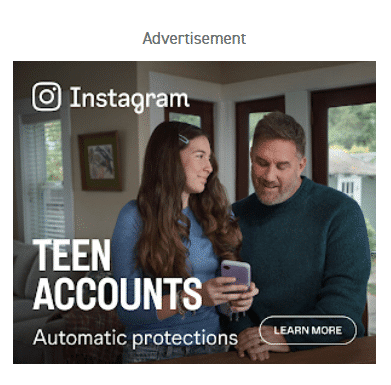
Postscript One (March 26, 2026): I saw this ad for the first time this morning — the day after verdict #2. It makes me hopeful that social media companies will expose additional controls the parents can opt into — or that kids can.